Explore the Wild Giants of Tanzania and the Top Safari Destinations
Tanzania is one of Africa’s top wildlife safari destinations, famous for its diverse ecosystems and incredible animals. Among the many species found here are the Tanzania Wild Giants—a group of large and powerful animals that dominate the country’s national parks and conservation areas.
These giants include the African elephant, hippopotamus, black rhinoceros, and African (Cape) buffalo. Three of these species—elephant, rhinoceros, and buffalo—are also part of Africa’s famous Big Five, once known as the most difficult animals to hunt on foot.
Today, they are among the most exciting animals to see on safari. Tanzania offers several excellent locations where travelers can encounter these impressive creatures in their natural habitats.
For example, large elephant herds roam the savannahs of Tarangire National Park, while thousands of hippos can be observed in remote wilderness areas such as Katavi National Park. Visitors hoping to see the endangered black rhinoceros and massive buffalo herds often head to the spectacular Ngorongoro Crater within the Ngorongoro Conservation Area.
Below is a closer look at these Tanzania wild giants and the best places to see them during a safari.
- African Elephant – Best Seen in Tarangire National Park
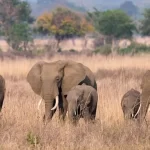
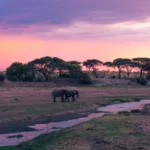
The African elephant is the largest land animal on Earth and one of the most iconic species in Tanzania. One of the best places to see large elephant populations is Tarangire National Park, which covers about 2,850 square kilometers and is known for its massive elephant herds.
The Park is named after the Tarangire River, an essential water source during the dry season. As surrounding areas dry out, thousands of animals migrate toward the river, creating excellent wildlife viewing opportunities.
The best time to see elephants and other wildlife in Tarangire is between August and October, when animals gather around water sources.
- Hippopotamus – Best Seen in Katavi National Park
The hippopotamus is another of Tanzania’s wild giants and one of Africa’s heaviest land mammals. A remarkable place to observe hippos in large numbers is Katavi National Park, located in the remote western part of the country.
Katavi covers approximately 4,471 square kilometers, making it the third-largest national park in Tanzania. Because of its remote location, it receives fewer visitors, offering a more exclusive and untouched safari experience.
During the dry season, animals congregate along the Katuma River, where hippos crowd into shrinking water pools. This period, especially June to October, provides spectacular wildlife viewing.
- Black Rhinoceros – Best Seen in Ngorongoro Crater
The black rhinoceros is one of Africa’s most endangered animals and among the rarest wildlife sightings on safari. One of the most reliable places to spot this magnificent species is the famous Ngorongoro Crater.
Often called the “Eighth Wonder of the World,” the crater is part of the larger Ngorongoro Conservation Area, a UNESCO World Heritage Site recognized for its outstanding natural beauty and biodiversity.
The crater’s enclosed ecosystem provides a protected habitat where a small but stable population of black rhinos continues to survive. It is one of the few places in Tanzania where visitors still have a good chance of seeing these endangered animals.
- African (Cape) Buffalo – Best Seen in Ngorongoro Crater
The African or Cape buffalo is another powerful member of the Big Five. Known for its strength and unpredictable temperament, it is considered one of Africa’s most dangerous animals.
Adult males can reach heights of 6 feet and weigh up to 1,750 pounds. Buffalo are particularly protective of their calves and can become aggressive when threatened.
Large herds of buffalo are frequently seen grazing across the grasslands of Ngorongoro Crater, making it one of the best locations in Tanzania to observe these impressive animals.
General Tips & Recommendations
- Visit during the dry season:
- Wildlife viewing is often best from June to October when animals gather near rivers and waterholes.
- Combine multiple parks: A northern Tanzania safari that includes Tarangire National Park and Ngorongoro Crater offers excellent chances of seeing several of the wild giants.
- Book early for peak seasons: Popular safari destinations fill quickly, especially during migration and peak travel months.
- Bring binoculars and a camera:Many wildlife sightings occur at a distance, and good equipment enhances the safari experience.
Here are sample itineraries to start planning your Tanzania Safari